Home > Blogs > Fairmont Agra: A New Palace-Scale Wedding Venue Seven Minutes From the Taj Mahal
20 August 2026
Category : Destination Wedding
Fairmont Agra: A New Palace-Scale Wedding Venue Seven Minutes From the Taj Mahal
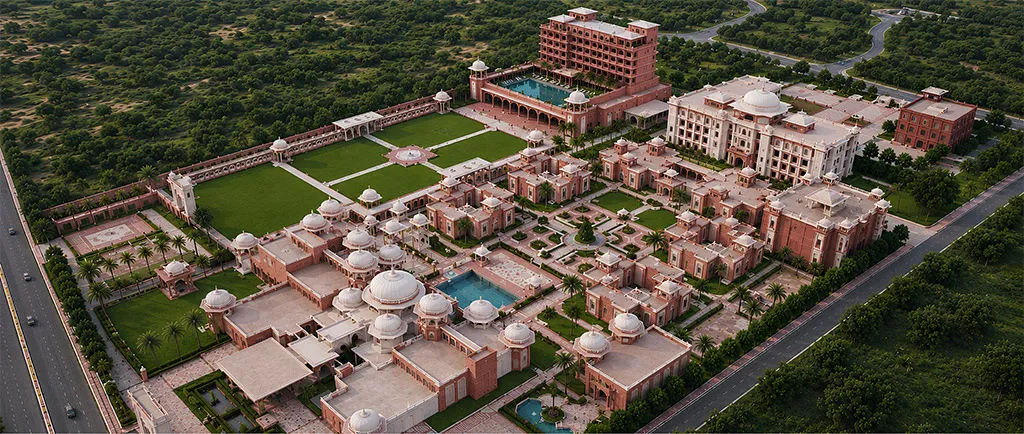
For decades, couples planning a destination wedding in North India have faced the same quiet compromise. Agra holds the single most romantic monument on earth - but the city has never had a hotel built to match it. Guests arrived for the Taj and slept in Delhi or Jaipur. The wedding happened somewhere else.
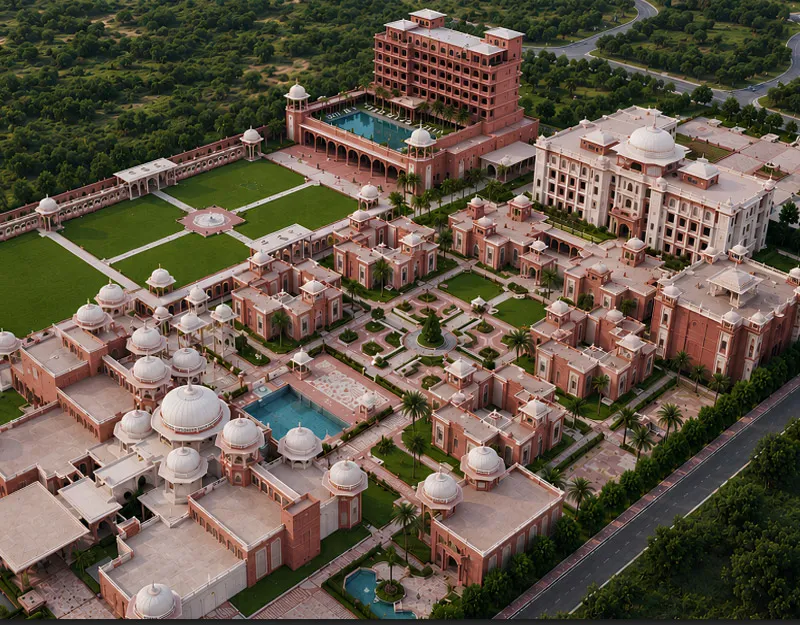
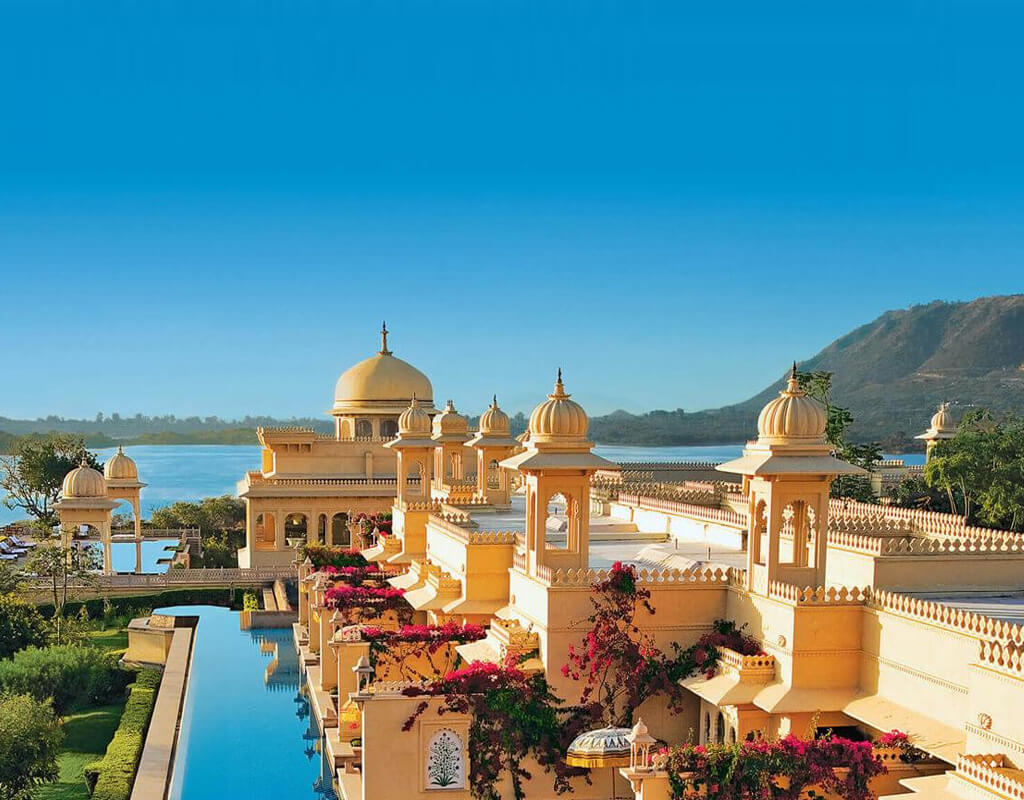
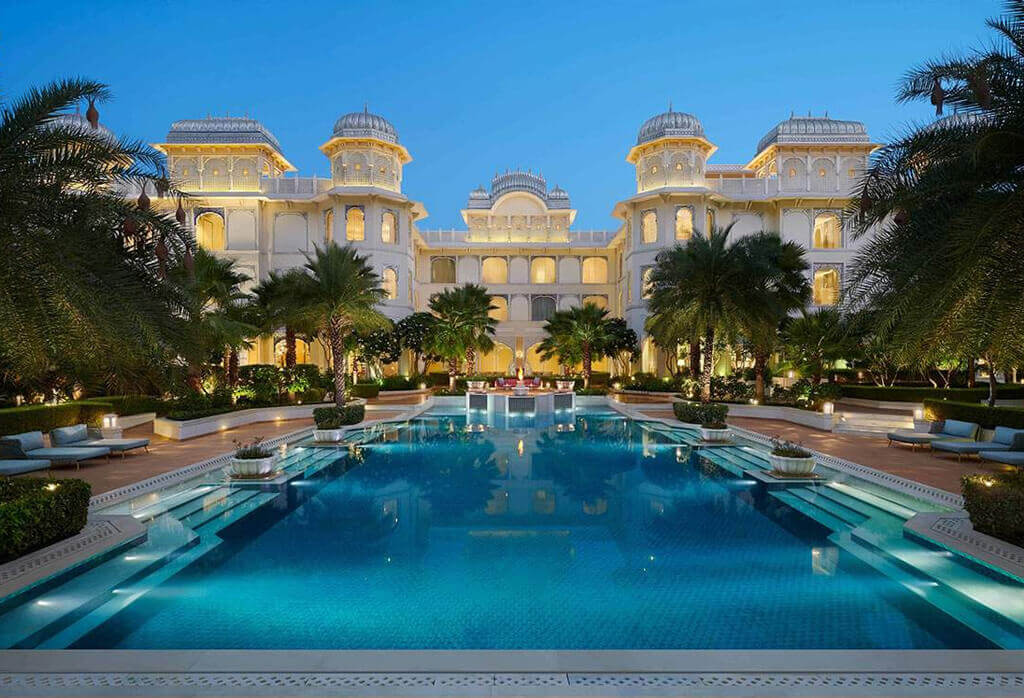
Fairmont Agra changes that equation. Rising on the banks of the Yamuna, roughly two kilometres from the Taj Mahal, it is the first property in the city conceived at genuine palace scale - 75,000 square feet of open lawn, a 20,000 square foot ballroom, a colonnade built for a baraat, and 210 rooms and suites. For NRI and international couples who have always wanted the Taj in their wedding story rather than just their honeymoon album, this is the venue that finally makes it practical.
Here is everything we know about the property, its wedding spaces, its capacities, and what planning a celebration in Agra actually involves.
Fairmont Agra at a Glance
- Location: Banks of the Yamuna River, Agra, Uttar Pradesh
- Distance to the Taj Mahal: Approximately 2 km - around a seven-minute drive
- Operator: Fairmont Hotels & Resorts (Accor), in partnership with Shekhar Resorts Limited
- Rooms & suites: 211 (Fairmont, 2026 openings list); the category breakdown below totals 210
- Largest event space: The Lawn - 75,000 sq ft, up to 7,500 guests standing
- Indoor flagship: The Grand Ballroom - 20,000 sq ft including pre-function, divisible into three halls
- Status: Opening late 2026 (Fairmont). Ask us for dates and provisional holds.
Fairmont Agra opening date and room count
Fairmont lists Agra among its 2026 openings, for late 2026, with 211 rooms and suites. The 2023 signing announcement said 205 rooms including 44 suites, and the pre-opening category list below adds up to 210. Plan a room block on about 200 rooms until the hotel publishes its final inventory. The hotel sits on the Yamuna, about 2 km from the Taj Mahal. For the full fact sheet see the Fairmont Agra venue page.
The Fairmont Legacy - and Why It Matters for a Wedding
Fairmont has been in the business of hosting occasions since 1907, with a portfolio of 97 hotels in some of the world's most recognisable addresses - The Plaza in New York, The Savoy in London, the Fairmont Peace Hotel in Shanghai. In India, the brand already runs Fairmont Jaipur, a long-established favourite for Rajputana-style weddings, alongside newer properties in Mumbai and Udaipur.
What this means in practice for a couple is operational depth. A brand that has run large-format weddings at Fairmont Jaipur for years brings the same banqueting systems, kitchen capacity and service ratios to Agra. For families flying in from the US, UK, Canada or the Gulf, that consistency matters more than it might appear on a brochure - it is the difference between a venue that can serve 800 plated covers on schedule and one that cannot.
With Agra joining Jaipur and Udaipur, Fairmont now covers the full northern Golden Triangle - which opens up genuinely interesting multi-city wedding itineraries for couples who want their guests to see more of India than one lawn.
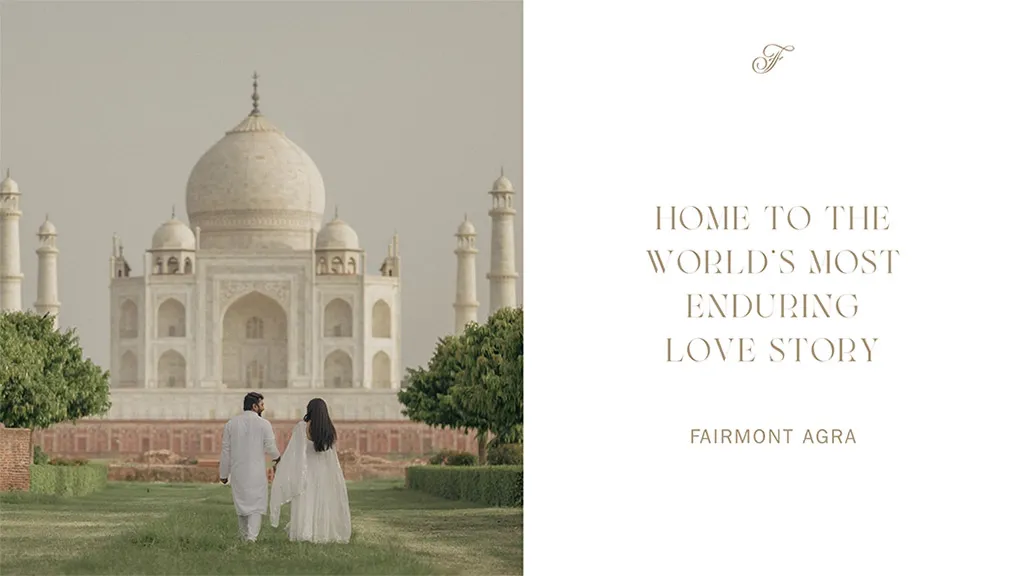
Why Agra Works as a Wedding Destination
Agra anchors India's Golden Triangle, the country's most-travelled tourist circuit linking Delhi, Agra and Jaipur. It is the only district in India with three UNESCO World Heritage Sites inside its boundaries - the Taj Mahal, Agra Fort and Fatehpur Sikri.
For a destination wedding in Agra, that concentration is unusually valuable. Your guests are not being asked to travel somewhere for a wedding alone. They are being handed a three-day cultural itinerary that happens to have your celebration at the centre of it. In our experience, this single factor does more to lift international RSVP rates than almost anything else a couple can control.

GETTING THERE: CONNECTIVITY FOR INTERNATIONAL GUESTS
Agra's accessibility has improved sharply, and this is where the destination has quietly overtaken several better-known alternatives.
- Noida International Airport (Jewar) - approximately 90 minutes via the Yamuna Expressway. One of the largest airports in the country, and a direct gateway for international arrivals.
- Delhi International Airport (DEL) - around a two-hour drive. Still the primary long-haul entry point for most NRI guests.
- Agra Kheria Airport (AGR) - roughly 20 minutes away, for domestic connections.
- Rail - Agra Cantt sits on India's fastest corridor. The Gatimaan Express and Vande Bharat cover Delhi to Agra in about 100 minutes.
- Road - the Yamuna Expressway runs uninterrupted to Delhi and the NCR in around two hours. Westward, the same road network reaches Jaipur.
The practical takeaway: a guest landing at Delhi in the morning can be at the hotel, changed and at a mehendi lunch by early afternoon. Very few Indian wedding destinations offer that.
The Wedding Venues at Fairmont Agra
The property was designed with processional celebration in mind, and it shows in how the spaces connect to each other rather than simply in their individual sizes.
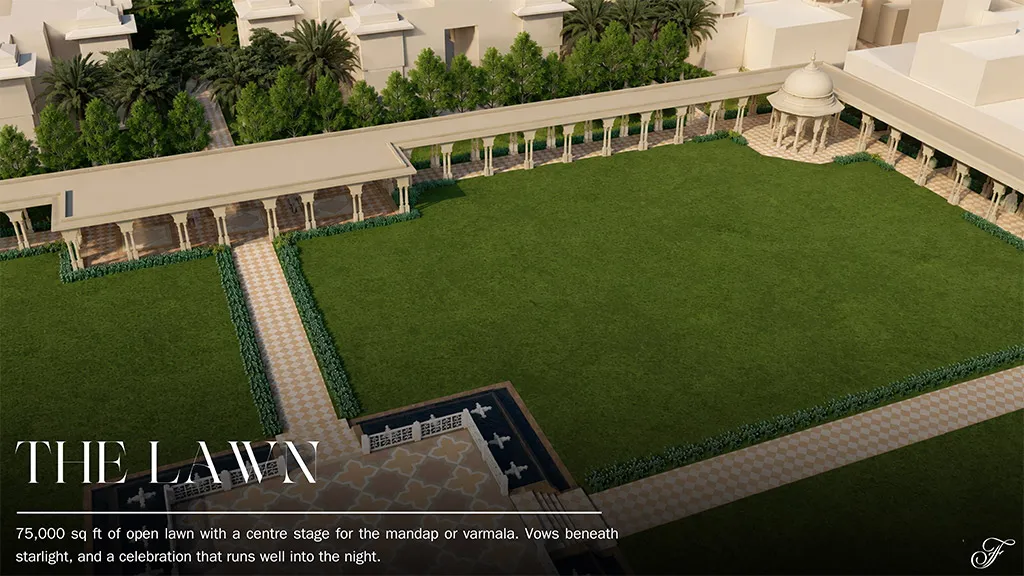
THE LAWN - 75,000 SQ FT
The centrepiece. Seventy-five thousand square feet of open lawn with a centre stage that can hold a mandap or varmala setup, with vows beneath open sky and room for celebration to run well past midnight. At 7,500 standing or 4,000 seated at round tables, this is one of the largest wedding lawns available at a luxury property anywhere in North India.
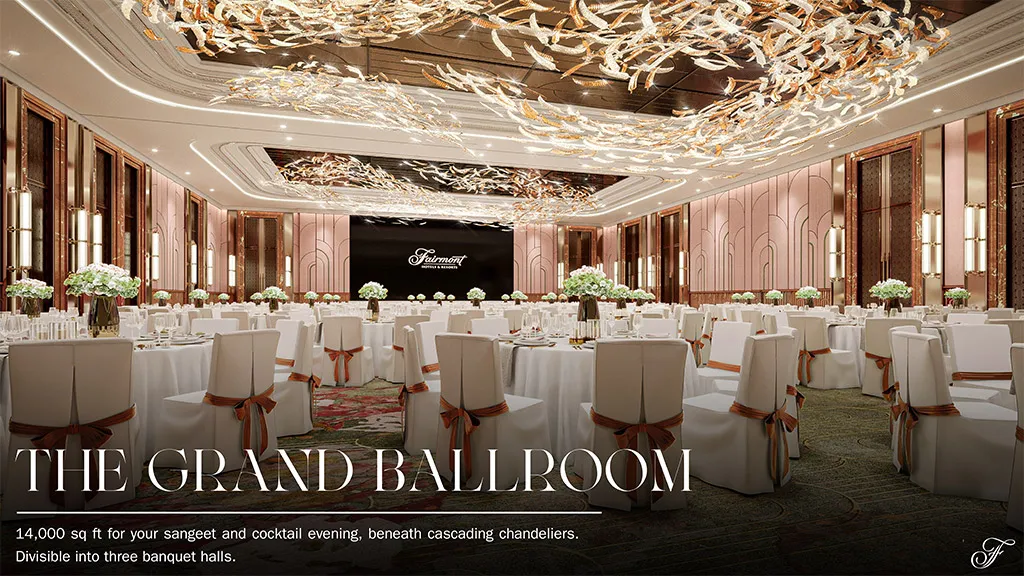
THE GRAND BALLROOM - 20,000 SQ FT INCLUDING PRE-FUNCTION
Beneath cascading chandeliers, with approximately 14,000 square feet of usable ballroom floor, this is the space for a sangeet or cocktail evening. It divides into three separate banquet halls, which is what makes it genuinely useful - a 250-guest wedding is not stranded in a cavernous room, and a large wedding can run parallel functions without conflict.
THE COLONNADE
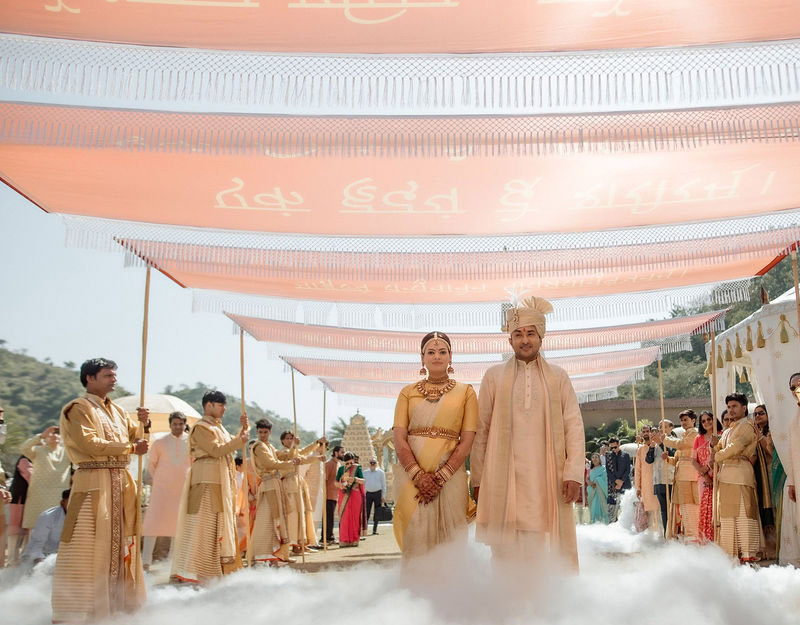
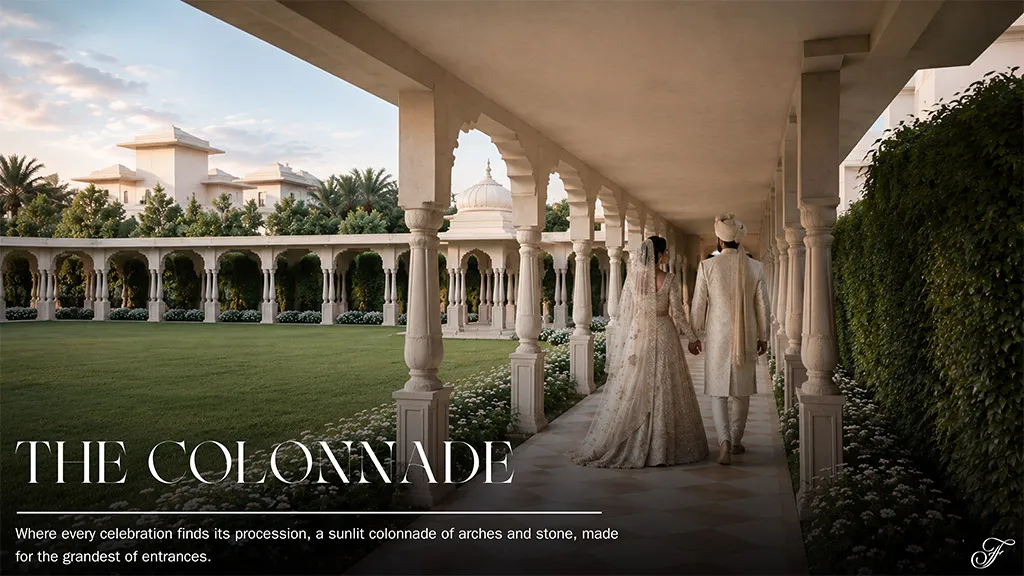
A sunlit walkway of arches and stone that opens directly onto the 75,000 sq ft lawn. This is the baraat aisle and the bridal procession route, and it is the detail that most distinguishes the property from a conventional hotel ballroom. Entrances staged here read very differently on film than a standard corridor arrival.
THE COURTYARD
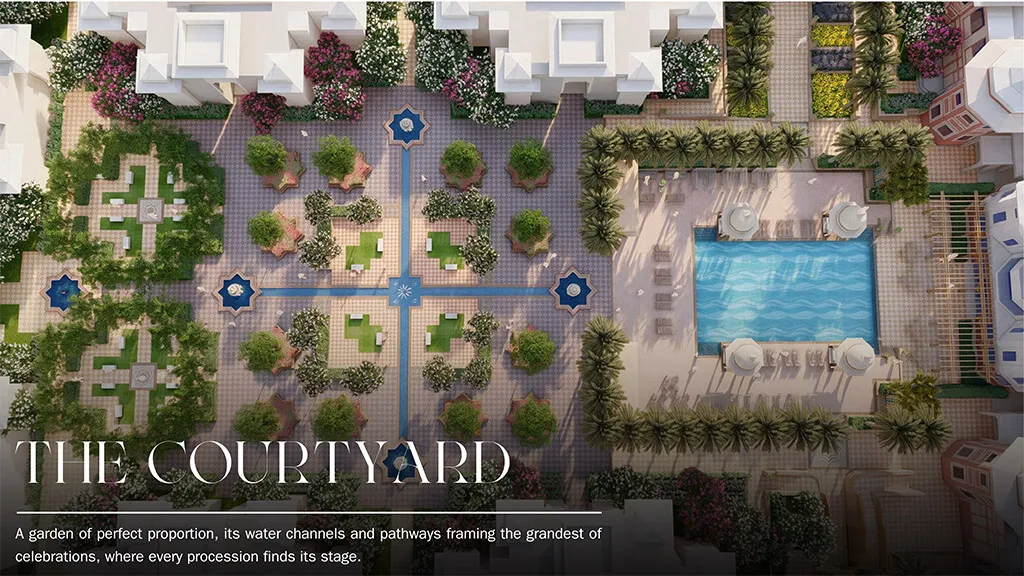
A formal garden of measured proportion, its water channels and pathways framing processions and smaller ceremonies. Well suited to a haldi, a mehendi, or an intimate pheras setup.
THE BANQUET - 4,000 SQ FT
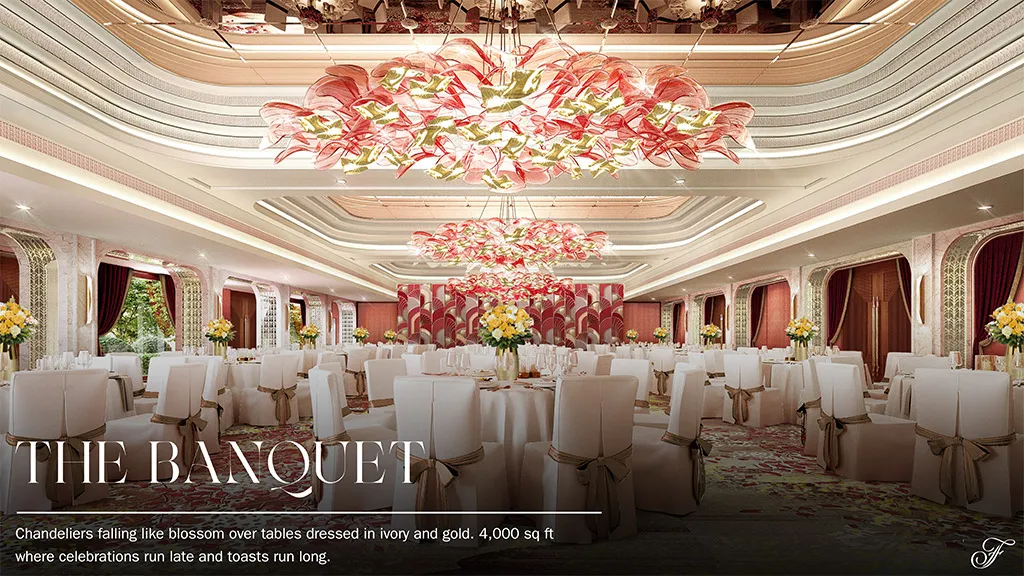
Chandeliers over tables dressed in ivory and gold. Two hundred guests standing, 100 at round tables. The right room for a welcome dinner, a mehendi lunch, or a family-only reception.
THE GRAND ENTRANCE AND PORTE COCHERE
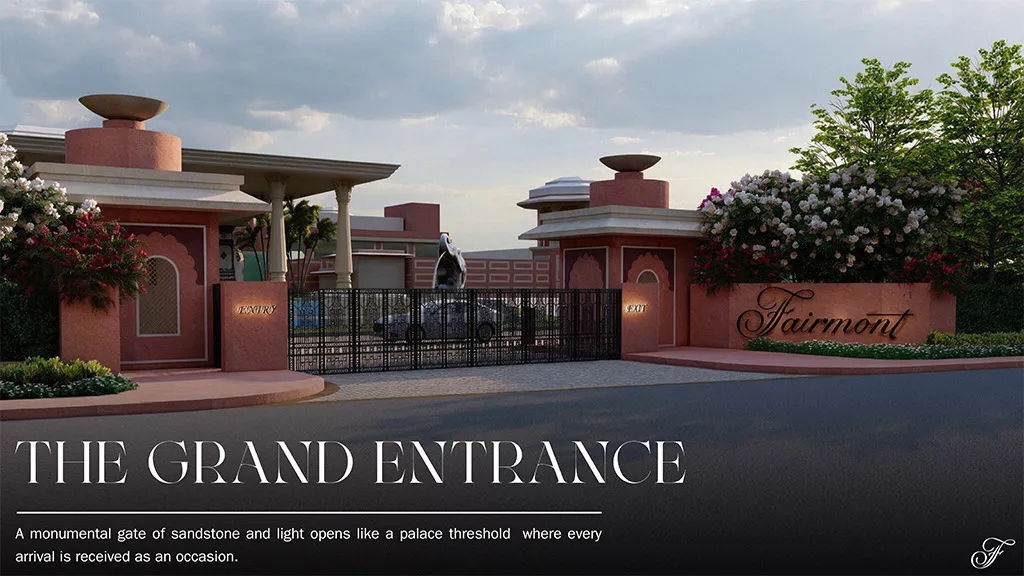
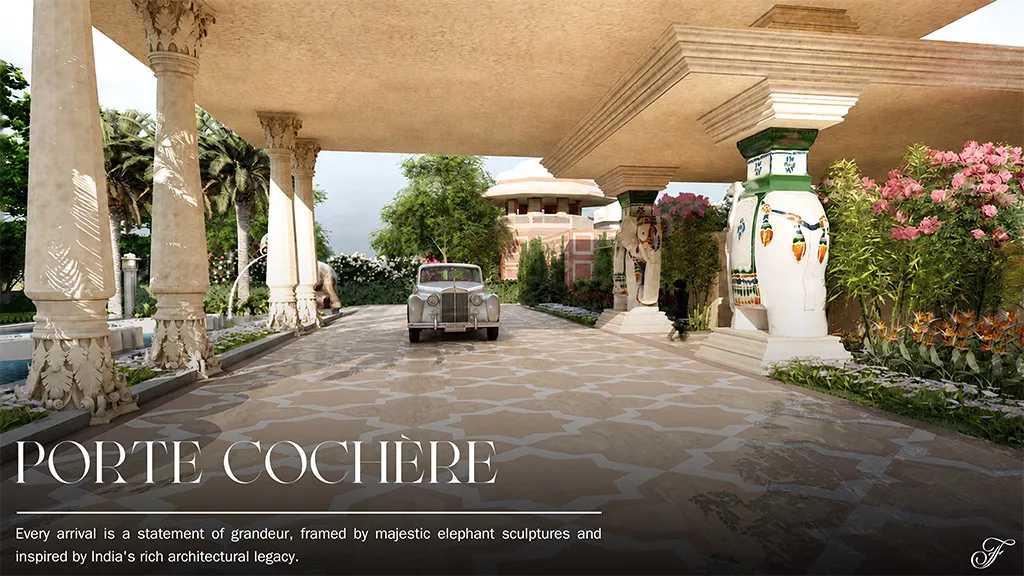
Arrival is treated as an event in itself - a monumental sandstone gate opening like a palace threshold, and a porte cochère framed by majestic elephant sculptures drawing on India's architectural legacy. Beyond it, the palatial lobby sits under a soaring dome.
CAPACITY CHART
| Venue | Area (sq ft) | Theatre | Classroom | Cluster | Round Table | Cocktail | Boardroom |
|---|---|---|---|---|---|---|---|
| The Lawn | 75,000 | 5,000 | 2,500 | 3,000 | 4,000 | 7,500 | - |
| The Grand Ballroom (incl. pre-function) | 20,000 | 770 | 450 | 550 | 500 | 1,000 | - |
| The Banquet | 4,000 | 150 | 90 | 120 | 100 | 200 | - |
| Meeting Room 1 | 1,490 | 57 | 36 | 42 | 40 | 60 | 24 |
| Meeting Room 2 | 800 | - | - | - | - | - | 9 |
| Board Room | 1,200 | - | - | - | - | 20 | 18 |
Rooms and Suites
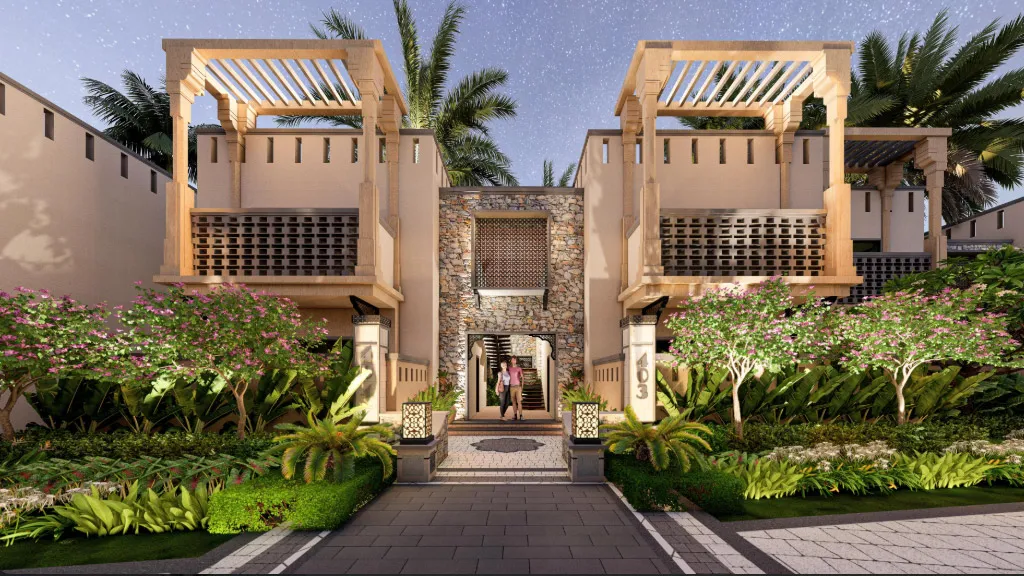
Two hundred and ten keys across seven categories - enough to accommodate a substantial wedding party in-house without spilling guests across the city.
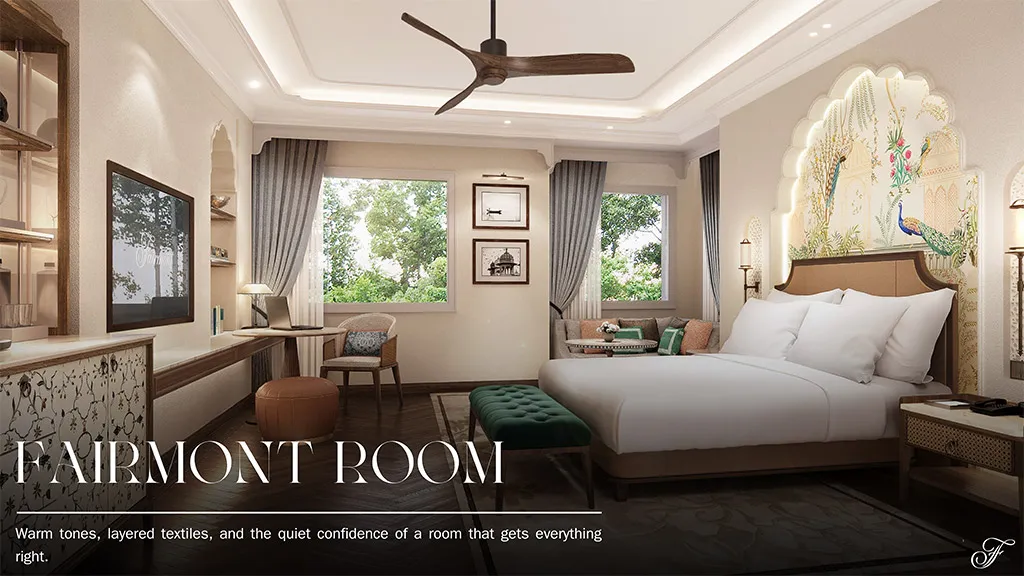
- Fairmont Room - 27 keys. Warm tones and layered textiles.
- Executive Room - 40 keys
- Signature Room - 40 keys
- Deluxe Room - 51 keys
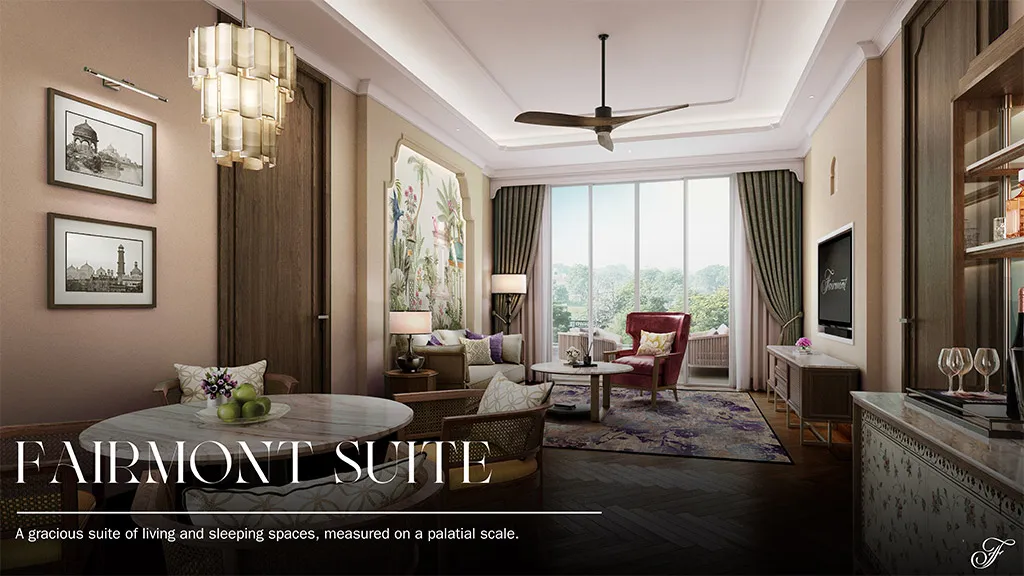
- Fairmont Suite - 48 keys. Separate living and sleeping spaces on a palatial scale, with marble and brass bathrooms.
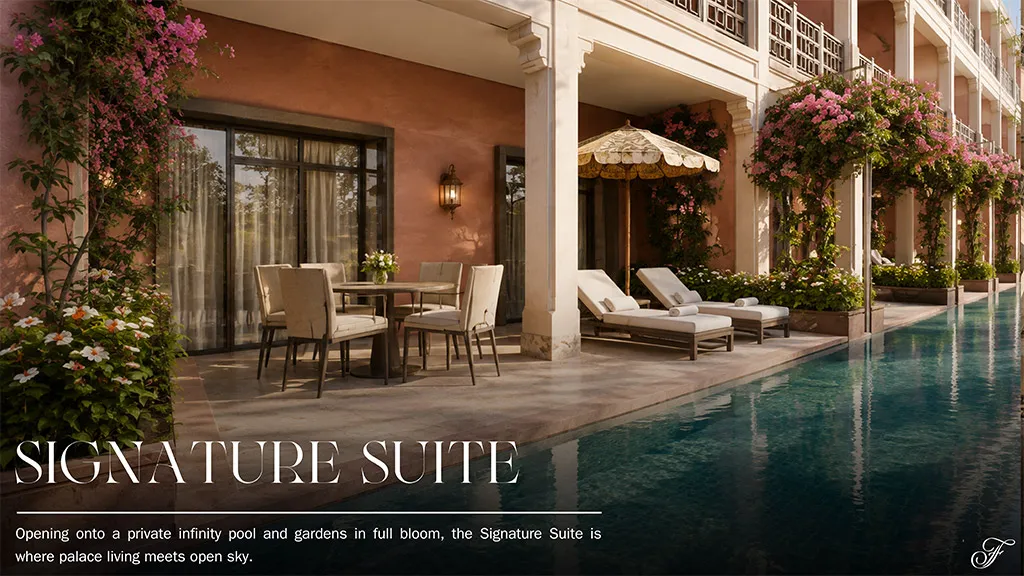
- Signature Suite - 3 keys. Opening onto a private infinity pool and gardens.
- Presidential Suite - 1 key. An expansive 226 sq m residence with direct access to the Gold Lounge, designed for private entertaining.
Planning note: for weddings above roughly 400 guests, plan on a room block strategy that combines a Fairmont buyout with a secondary property nearby. Our team handles this allocation, including matching families to room categories, so that nobody's grandmother ends up twenty minutes from the mandap.

Dining
Six distinct venues, which gives a multi-day wedding real menu variety without every meal feeling like banquet catering.
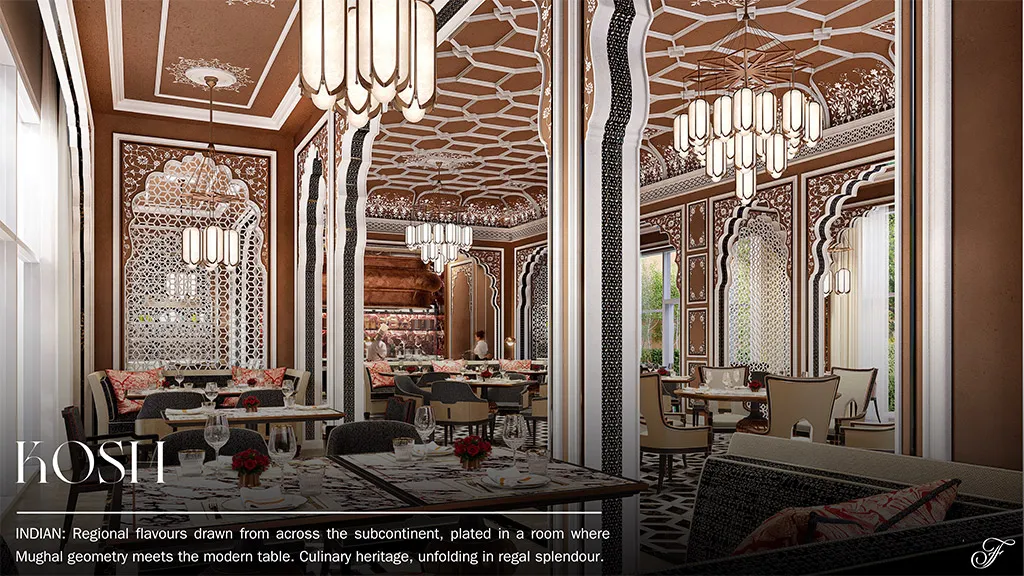
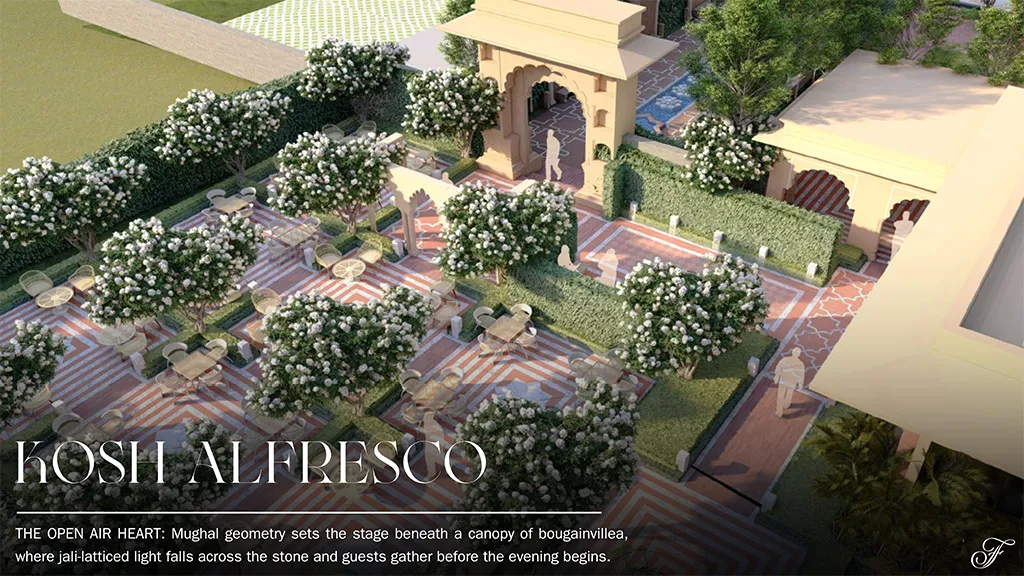
- Kosh - Indian. Regional flavours from across the subcontinent, in a room where Mughal geometry meets a modern table. Kosh Alfresco extends this outdoors beneath bougainvillea and jali-latticed light - an excellent pre-function gathering space.
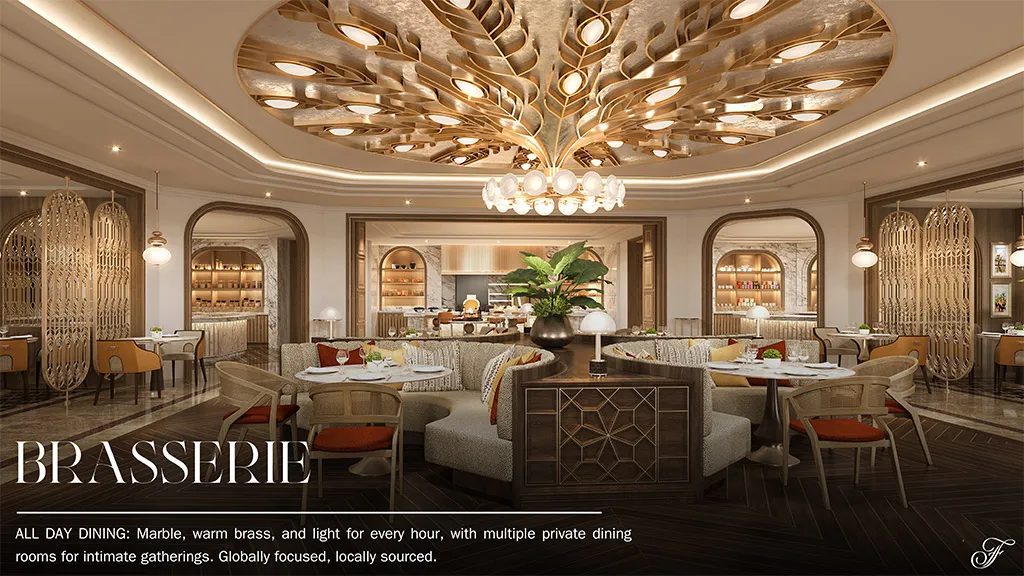
- Brasserie - All-day dining in marble and warm brass, globally focused and locally sourced, with multiple private dining rooms for intimate family gatherings.
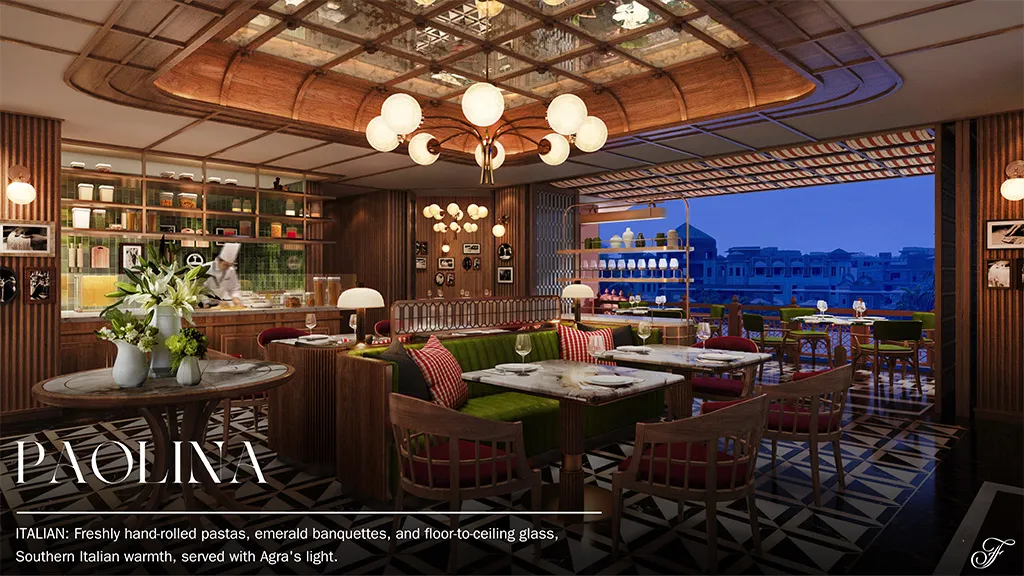
- Paolina - Italian. Hand-rolled pastas, emerald banquettes and floor-to-ceiling glass.
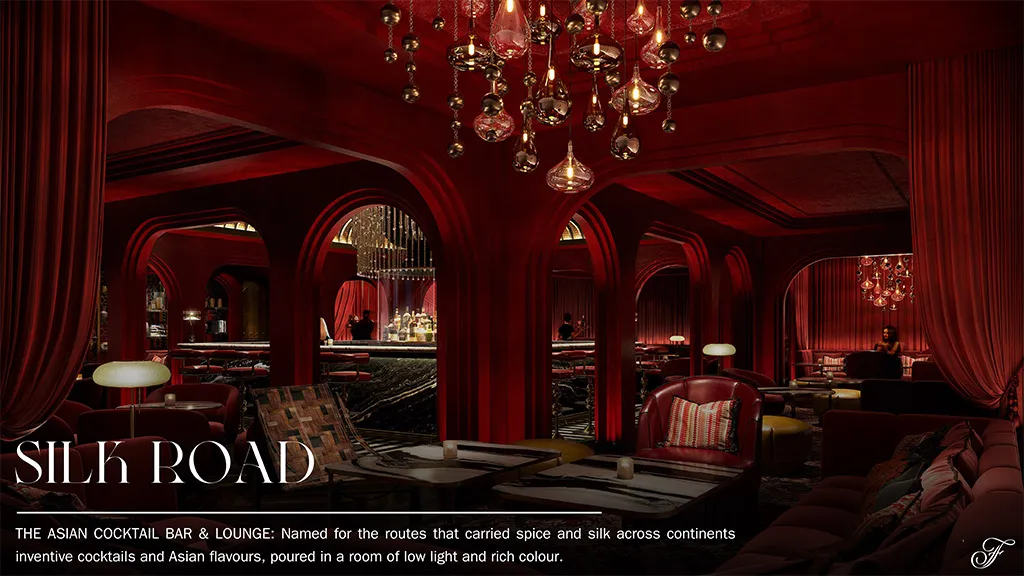
- Silk Road - Asian cocktail bar and lounge. Inventive cocktails and Asian flavours in low light and rich colour. A natural after-party room.
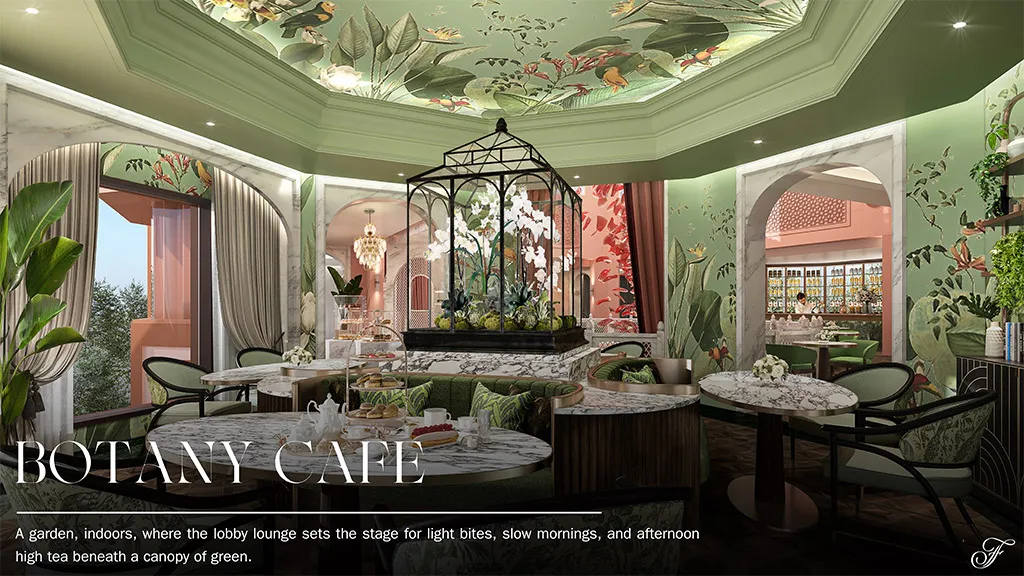
- Botany Cafe - A garden indoors, where the lobby lounge hosts light bites and afternoon high tea.
- Dine by Design - Bespoke private dining setups, which is how most couples handle a family-only welcome dinner or a curated evening for two.
Wellness and Recreation
Worth taking seriously when your guests are arriving jet-lagged from a twelve-hour flight and you need them functional for a 6 AM haldi.
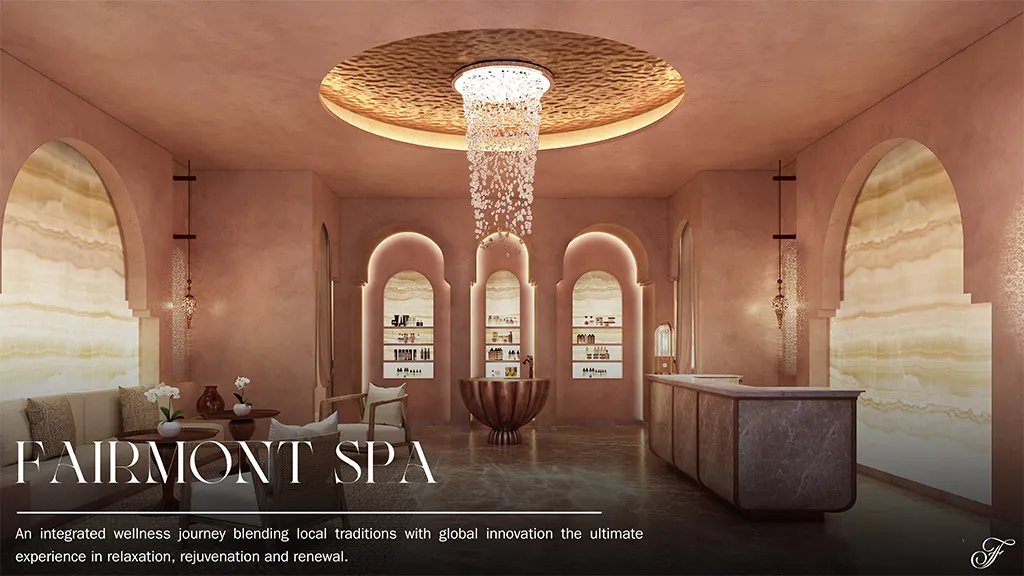
- Fairmont Spa - An integrated wellness journey blending local traditions with global technique, with therapy suites for single or couple rituals.
- Fairmont Fit - Gym with natural light, patterned stone and expert trainers.
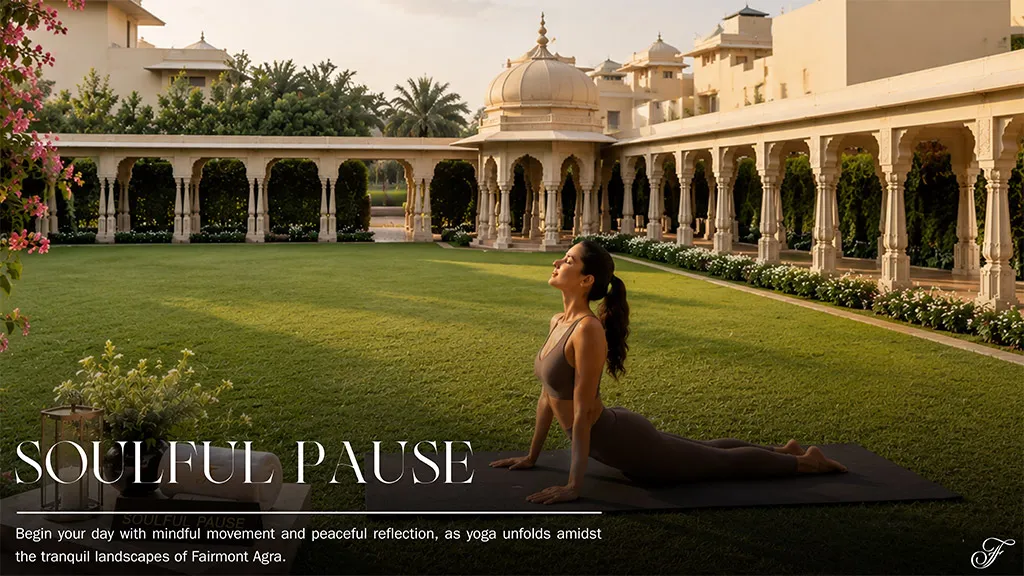
- Yoga - Morning sessions across the property's landscaped grounds.
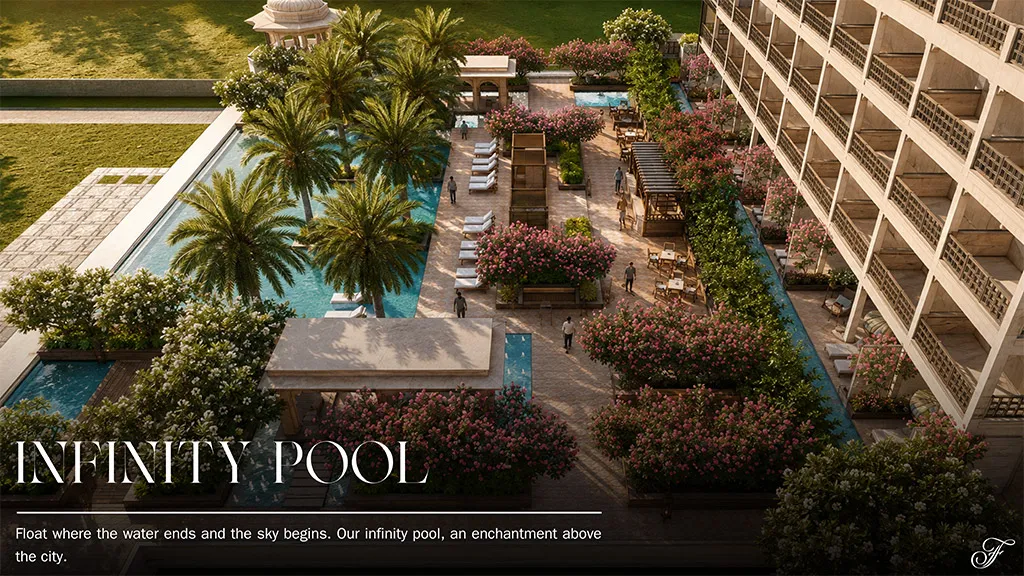
- Swimming pools - A heated main pool with sunken cabana decks, a separate infinity pool, and a dedicated children's pool.
- Kids Zone - A slide spiralling down from the mezzanine, a climbing wall, and a pool sized for children. Genuinely useful for the many NRI families travelling with young kids.
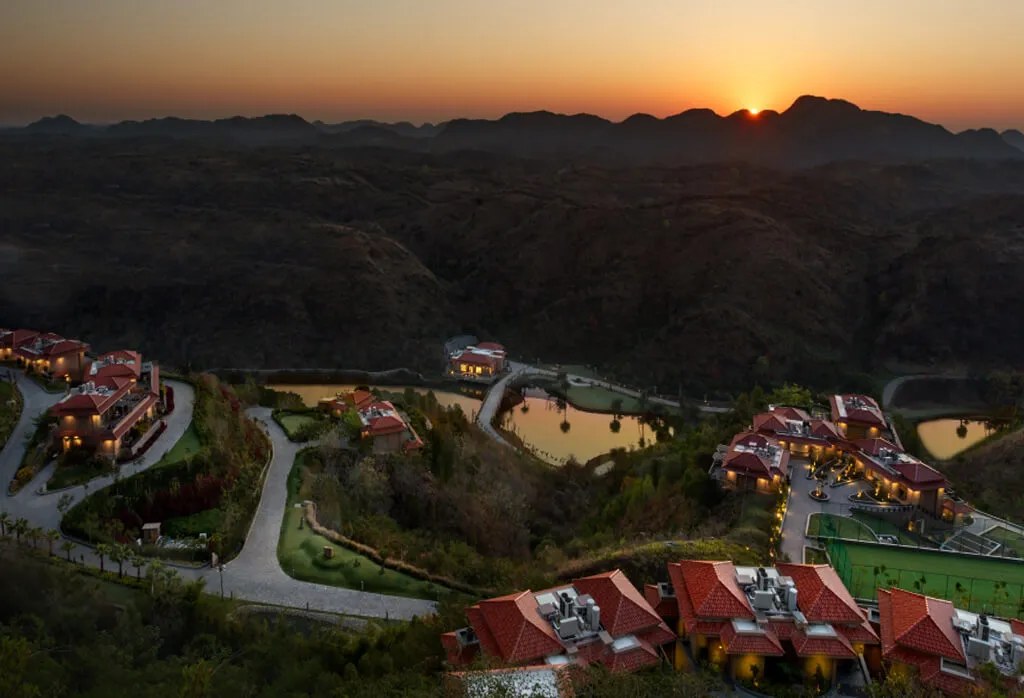
- Water features - Eighteen distinct waterbodies thread through the estate, from reflecting pools to garden fountains.


What a Fairmont Agra Wedding Costs
Fairmont Agra has not published wedding rates yet. IWP's all-inclusive budget bands below cover venue, rooms, food, décor and planning for a multi-day wedding; above about 400 guests, plan a second hotel for the room block. More: wedding venues in Agra, Jaipur venues for a Golden Triangle itinerary, and 2027 Hindu wedding dates.
| Band | Guests | All-inclusive budget from |
|---|---|---|
| Intimate | 50–100 | about US$105,000 (₹1 crore) |
| Premium | 150–250 | US$315,000–525,000 (₹3–5 crore) |
| Royal | 300–500 | US$725,000–1.05 million (₹7–10 crore) |
| Ultra-luxe | 500+ or buyout | US$1.05 million+ (₹10 crore+) |
Two variables move these numbers more than anything else: décor ambition and entertainment. A 75,000 sq ft lawn is a blank canvas, and dressing it fully costs meaningfully more than dressing a ballroom. Similarly, a Bollywood headline act can add a figure comparable to the entire F&B spend. We build budgets around these two decisions first, because everything else scales predictably.
When to Get Married in Agra: A Season-by-Season Guide
NOVEMBER TO FEBRUARY - PEAK SEASON
The best weather by a clear margin. Daytime temperatures in the low twenties Celsius, cool evenings, and the light that makes Agra's sandstone photograph the way it does in every image you have seen. This is when almost all luxury weddings happen, and it is when dates disappear first.
The one caveat: late December and January bring dense North Indian fog. This is not a minor inconvenience. Fog routinely delays flights into Delhi, slows the Yamuna Expressway, and obscures sunrise views of the Taj. If you are marrying in this window, build a buffer day into guest arrival schedules and consider rail over road for Delhi transfers, since trains are far less fog-affected than flights.
OCTOBER AND MARCH - SHOULDER SEASON
Warm, clear and largely fog-free. October in particular is underrated - the monsoon has cleared, the light is excellent, and availability is better than December. March warms quickly toward month-end but works well for morning and evening functions.
APRIL TO JUNE - AVOID FOR OUTDOOR FUNCTIONS
Agra summers are severe, regularly exceeding 40°C. A lawn wedding in May is not viable for guests unaccustomed to that heat. If a date in this window is unavoidable for astrological reasons, the celebration should move indoors to the Grand Ballroom, with outdoor elements restricted to after sunset.
JULY TO SEPTEMBER - MONSOON
Rain is unpredictable rather than constant, and rates are at their lowest. Workable for an intimate indoor wedding, but a 75,000 sq ft lawn celebration in this window requires a full weatherproofing plan and a genuine indoor contingency - which adds cost and partly offsets the seasonal saving.
Planning Notes for NRI and International Couples
A few Agra-specific considerations that do not apply elsewhere in India, and that catch couples out with some regularity.
THE TAJ MAHAL IS CLOSED ON FRIDAYS
If you are building a guest excursion to the Taj into your wedding itinerary - and you should - this single fact will shape your entire schedule. A Friday wedding day works well precisely because the Taj visit has to happen on another day anyway. A Thursday or Saturday wedding needs the excursion carefully placed.
ENVIRONMENTAL RESTRICTIONS NEAR THE MONUMENT
Agra sits within the Taj Trapezium Zone, an environmentally protected area around the monument where emissions are tightly regulated. Rules affecting fireworks and certain types of display have been subject to court orders and change periodically. Do not assume a fireworks finale is possible - verify current permissions well ahead of time. Our team confirms this at the point of booking rather than in the final week.
PHOTOGRAPHY PERMISSIONS
Photography at and around the Taj Mahal is governed by Archaeological Survey of India rules, with restrictions on commercial shoots, tripods and drone use in the vicinity. A couple's portrait session at the Taj requires advance coordination and, in most cases, formal permission. This is arrangeable - it simply is not spontaneous.
DOCUMENTATION
NRI and foreign-national couples marrying in Uttar Pradesh should begin marriage registration paperwork well in advance, as requirements differ from those in Rajasthan and Maharashtra. OCI holders, foreign passport holders and mixed-nationality couples each face slightly different documentation. Start this conversation at least four months out.
GUEST ARRIVAL LOGISTICS
For a guest list weighted toward the US, UK, Canada or the Gulf, we generally recommend routing arrivals through Delhi with a coordinated ground transfer along the Yamuna Expressway, rather than asking guests to manage a domestic connection into Kheria. Fewer moving parts, fewer missed bags, fewer stressed relatives.
Beyond the Property: What Your Guests Can Do
Three days of functions leaves gaps, and Agra fills them unusually well.
HERITAGE AND CULTURE: the Taj Mahal, Agra Fort, Fatehpur Sikri, Mehtab Bagh - the garden across the Yamuna offering the Taj's most photographed rear view at sunset - and guided heritage walks through the old city.
FAITH AND REFLECTION: Vrindavan and Mathura, the heartland of Krishna devotion, both within comfortable reach. Closer to the city, Bateshwar, Guru Ka Taal and Dayalbagh.
ADVENTURE AND NATURE: Chambal safari for river dolphins and gharial, hot air ballooning over the plains, cycling trails, village experiences and wildlife excursions.
We build these into a printed guest itinerary as standard. It is a small thing that consistently draws the warmest feedback from international families, who arrive expecting a wedding and leave having actually seen India.
Why Work With a Local Wedding Planner in Agra
Agra is a newer luxury wedding market than Udaipur or Jaipur, which cuts both ways. Availability is better and rates are more negotiable - but the vendor ecosystem is thinner, and the difference between an experienced supplier and an unproven one is wider than it would be in a mature market.
A planner with genuine on-ground presence in North India brings three things a couple cannot assemble remotely from Houston or Hounslow. First, vetted vendors - décor teams, choreographers, sound engineers and makeup artists who have delivered at this scale before, most of whom travel in from Delhi or Jaipur and need to be booked early. Second, permissions - the Taj Trapezium restrictions, ASI photography clearances and local licensing are navigable, but only by someone who has navigated them before. Third, negotiation leverage - a planner placing multiple weddings a year with a hotel group secures terms an individual family simply cannot.
For a pre-opening property in particular, there is a fourth advantage: early access. Inventory and rates for a new luxury hotel are most favourable in its first two seasons, and planners with established relationships hear about released dates first.
About Indian Wedding Planners
Indian Wedding Planners (IWP) is a luxury destination wedding planning company headquartered in Jaipur, with a second base in Mumbai. Founded by Anant Khandelwal, we specialise in royal and luxury weddings across Rajasthan, the wider Golden Triangle and international destinations, with 250+ weddings planned to date.
Our work is weighted toward NRI and international couples - families based in the US, UK, Canada, the UAE and Australia planning a wedding in India from thousands of miles away. That means we are built around the specific problems that distance creates: guest logistics across multiple time zones, documentation for foreign nationals, vendor coordination when you cannot attend a site visit, and transparent budgets in both rupees and your own currency.
Your Vision. Our Canvas. No Distance.
Frequently Asked Questions
CAN YOU GET MARRIED AT THE TAJ MAHAL?
No. The Taj Mahal is a protected ASI monument and does not host weddings or ceremonies. What is possible - and what most couples actually want - is to marry at a nearby luxury venue such as Fairmont Agra, with a Taj Mahal photography session and a guest excursion built into the itinerary. Both require advance permission but are routinely arranged.
HOW FAR IS FAIRMONT AGRA FROM THE TAJ MAHAL?
Approximately two kilometres, or around a seven-minute drive. The hotel sits on the banks of the Yamuna River, the same river the Taj overlooks.
HOW MANY GUESTS CAN FAIRMONT AGRA ACCOMMODATE FOR A WEDDING?
The Lawn holds up to 7,500 guests for a standing reception or 4,000 seated at round tables, making it suitable for very large celebrations. The Grand Ballroom accommodates up to 1,000 for cocktails and divides into three halls for smaller functions. The property has 210 rooms and suites for in-house accommodation.
IS FAIRMONT AGRA OPEN YET?
Fairmont lists Agra among its openings for late 2026. IWP can request provisional holds for 2027 dates.
WHAT IS THE BEST TIME OF YEAR FOR A WEDDING IN AGRA?
November to February offers the best weather, with daytime temperatures in the low twenties Celsius. October and March are strong shoulder options with better availability. Avoid April to June, when temperatures regularly exceed 40°C and outdoor functions become impractical.
HOW DO INTERNATIONAL GUESTS REACH AGRA?
Most fly into Delhi and travel by road along the Yamuna Expressway, roughly two hours. Noida International Airport at Jewar is around 90 minutes away, and Agra Kheria Airport handles domestic connections around 20 minutes from the hotel. The Gatimaan Express and Vande Bharat connect Delhi to Agra Cantt in about 100 minutes and are the most fog-resilient option in winter.
CAN YOU HAVE FIREWORKS AT AN AGRA WEDDING?
Fireworks near the Taj Mahal are restricted under environmental protections covering the Taj Trapezium Zone, and the rules have changed with successive court orders. Do not plan on a fireworks finale without confirming current permissions. Alternatives such as cold pyro, drone light shows and projection mapping are frequently used instead, subject to the same verification.
HOW FAR IN ADVANCE SHOULD WE BOOK FAIRMONT AGRA FOR A WEDDING?
For peak-season dates between November and February, we recommend 12 to 18 months. For a pre-opening property, early conversations matter even more - inaugural-season inventory moves quickly once an opening date is confirmed publicly.
HOW MANY ROOMS DOES FAIRMONT AGRA HAVE?
211 rooms and suites according to Fairmont's 2026 openings list (205 including 44 suites at signing in 2023).
HOW MUCH DOES A DESTINATION WEDDING IN AGRA COST?
IWP's all-inclusive bands: about US$105,000 (₹1 crore) for 50–100 guests; US$315,000–525,000 (₹3–5 crore) for 150–250; US$725,000–1.05 million (₹7–10 crore) for 300–500; US$1.05 million+ (₹10 crore+) for 500+ or a buyout.
HOW DO WE ENQUIRE ABOUT A WEDDING AT FAIRMONT AGRA?
Share your dates, approximate guest count and preferred style through the enquiry form on indianweddingplanners.in. Our team responds within 24 hours with a venue assessment, an indicative budget in both INR and your local currency, and available date options.
PLANNING A WEDDING NEAR THE TAJ MAHAL?
Let Indian Wedding Planners turn your vision into a celebration your guests will never forget. ENQUIRE NOW